

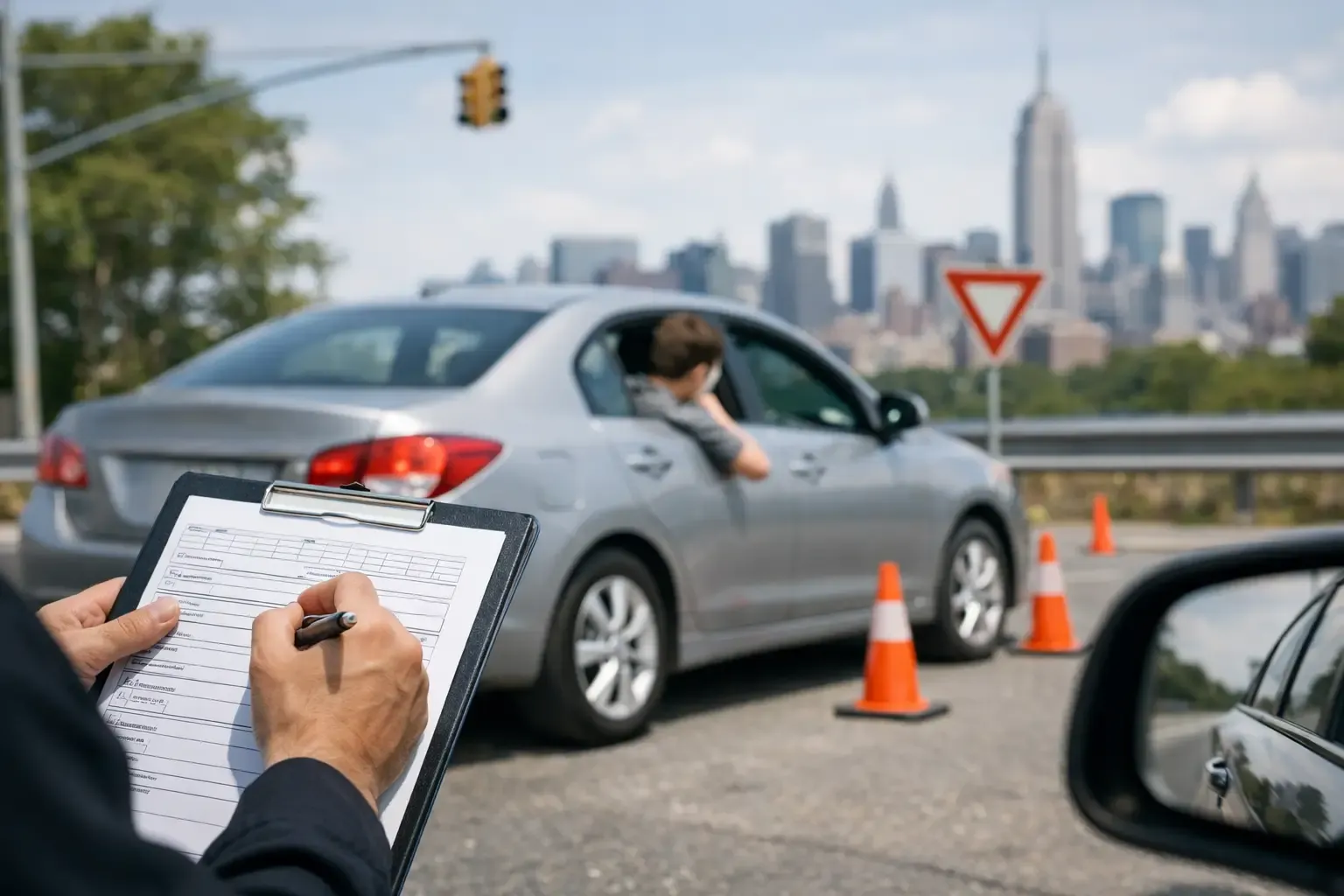
A road test can feel surprisingly short. In a matter of minutes, an examiner is watching how you prepare, move through Brooklyn or NYC traffic, respond to instructions, and make safety decisions. The top mistakes on NY road test are rarely about complicated driving maneuvers. More often, they come from small habits that a nervous driver forgets under pressure.
The good news is that these mistakes are trainable. With calm, focused practice, you can replace guesswork with a routine that feels natural from the moment you get into the driver’s seat.
Top Mistakes on the NY Road Test
Starting before the car is fully ready
Many road tests begin poorly before the vehicle even moves. A driver may forget to adjust the seat, set mirrors, fasten the seat belt, or confirm that the parking brake is released. These details show the examiner whether you are prepared to operate the car safely.
Build a consistent pre-drive routine: seat, mirrors, seat belt, controls, and surroundings. Take a breath before putting the vehicle in gear. There is no prize for rushing away from the curb. A composed start creates a better rhythm for the rest of the test.
Missing observation checks
Looking is not the same as checking. Examiners need to see that you actively scan mirrors, check intersections, and look over your shoulder before changing position. A quick glance at the right moment can prevent one of the most common test problems: moving toward a lane, curb, or parking space without confirming it is clear.
Pay special attention when pulling away from the curb, changing lanes, merging, making turns, and backing up. Check mirrors early, use the signal when appropriate, and make a clear shoulder check for the blind spot. Do not turn your whole body away from the road for too long, but make the observation visible and deliberate.
Forgetting signals or using them too late
A signal tells other road users what you intend to do. Using it after you have already started turning or pulling over does not give anyone useful notice. On a road test, late signals can also suggest that you are reacting at the last second rather than planning ahead.
Signal before you move, then cancel the signal after completing the maneuver if the vehicle does not do it automatically. If the examiner tells you to pull over, avoid immediately steering toward the curb. First, check mirrors and the blind spot, signal, and move over only when it is safe.
Turning without controlling speed
New York streets demand patient turns. Approaching a corner too quickly, braking sharply in the turn, cutting across the corner, or drifting wide into another lane can all raise concerns. This is especially noticeable at intersections with pedestrians, parked cars, cyclists, or limited visibility.
Slow down before the turn, not halfway through it. Keep your hands controlled, stay in the proper lane, and finish the turn in the correct lane. At a stop sign, make a complete stop behind the limit line or crosswalk, scan carefully, and go only when the intersection is clear.
Incomplete stops at stop signs
A rolling stop is one of the easiest ways to lose an examiner’s confidence. The car must come to a full stop. If you can still feel the car creeping, it is not a full stop.
Practice stopping smoothly with enough room to see the intersection. If your view is blocked by a parked vehicle or a building, stop first at the proper location, then inch forward carefully to improve visibility. That second movement should be slow and controlled. It shows judgment, not hesitation.
Poor speed control
Driving too fast is an obvious risk, but driving far below the normal flow without a reason can also create problems. The examiner wants to see that you can maintain an appropriate, legal speed while staying aware of road conditions.
Watch for posted speed limits and adjust for rain, congestion, narrow streets, school zones, and pedestrians. Do not stare at the speedometer. Check it regularly, then return your attention to the road ahead. Smooth acceleration and gentle braking make your driving look more confident and give you more time to react.
Making unsafe or rushed lane changes
A lane change requires more than turning the steering wheel. Drivers sometimes signal and move immediately, forgetting to check mirrors and blind spots. Others wait too long, then make a sudden move because they fear missing a turn.
Plan early. If you need to change lanes, identify a safe gap, check your mirrors, signal, shoulder-check, and move gradually. If a turn is coming up and it is no longer safe to change lanes, continue straight. Taking the wrong route is usually better than making an unsafe correction. Follow the examiner’s next instruction calmly.
Trouble with parallel parking and backing
Parallel parking makes many otherwise capable drivers tense because every movement feels visible. Common issues include beginning too far from the parked car, forgetting to look behind while backing, striking the curb hard, or repeatedly making large corrections without a plan.
The goal is controlled parking, not a perfect-looking park completed at high speed. Use a method your instructor has taught you, move slowly, and keep checking around the vehicle. You may make reasonable adjustments when needed. What matters is that you do not hit another vehicle, create a hazard, or lose awareness while focusing only on the curb.
Backing up deserves the same attention. Mirrors are helpful, but you should also turn and look through the rear window as appropriate. Back slowly enough that you could stop immediately if a pedestrian, car, or obstacle appears.
Ignoring pedestrians and right-of-way rules
NYC drivers are used to busy intersections, but familiarity can create bad habits. During the road test, failing to yield to a pedestrian or entering an intersection without enough space can be a serious safety issue.
Treat every crosswalk as active, even when the street looks quiet. Before turning, check for people crossing in the direction of your turn. At intersections, understand who has the right of way and do not force another driver, cyclist, or pedestrian to react to you. A few extra seconds of patience can protect both your test result and everyone around you.
Letting nerves take over the drive
Nerves can make a prepared student drive differently than they do in a lesson. Some drivers grip the wheel too tightly, brake repeatedly, overthink every instruction, or become silent and frozen after a small mistake. One imperfect moment does not automatically mean the test is over.
If something feels slightly off, correct it safely and continue. Keep listening to the examiner, but do not assume an instruction requires an unsafe action. If you do not hear or understand a direction, politely ask for it to be repeated. Clear communication is better than guessing.
How to Practice for a More Confident Road Test
Practice should look like the test, not just like casual driving. Spend time on residential streets where you can work on stop signs, right-of-way decisions, pulling to the curb, turns, and scanning. Then practice the maneuvers that make you nervous until the sequence feels familiar.
A mock road test is especially useful because it reveals habits you may not notice on your own. Ask your instructor to give directions with minimal coaching, observe your signals and visual checks, and explain which errors are minor habits versus genuine safety concerns. This is more productive than repeating the same route without feedback.
It also helps to practice in the type of vehicle you will use on test day. Learn where the mirrors, turn signals, wipers, parking brake, and defroster are located. A clean, well-maintained training vehicle removes one more source of distraction when you need to focus on the road.
For students who want a structured plan from permit lessons through road test preparation, Sky Light Driving School provides one-to-one instruction designed around the skills that need the most work. Patient feedback, familiar test-style practice, and a professional approach can make the process feel far more manageable.
On test day, arrive with time to settle in, check your documents, and prepare the vehicle without rushing. Then drive the way you have practiced: observant, steady, courteous, and safe. Confidence does not mean forcing every maneuver perfectly. It means knowing how to make sound decisions, even when the road feels busy.
💡 Expert Advice
Mastering the NY road test requires confidence and control. Focus on consistent habits rather than mere tactics and remember: every detail matters. Cultivate patience and remain calm throughout your drive. These small adjustments can transform your performance and pave the way for success behind the wheel!


