

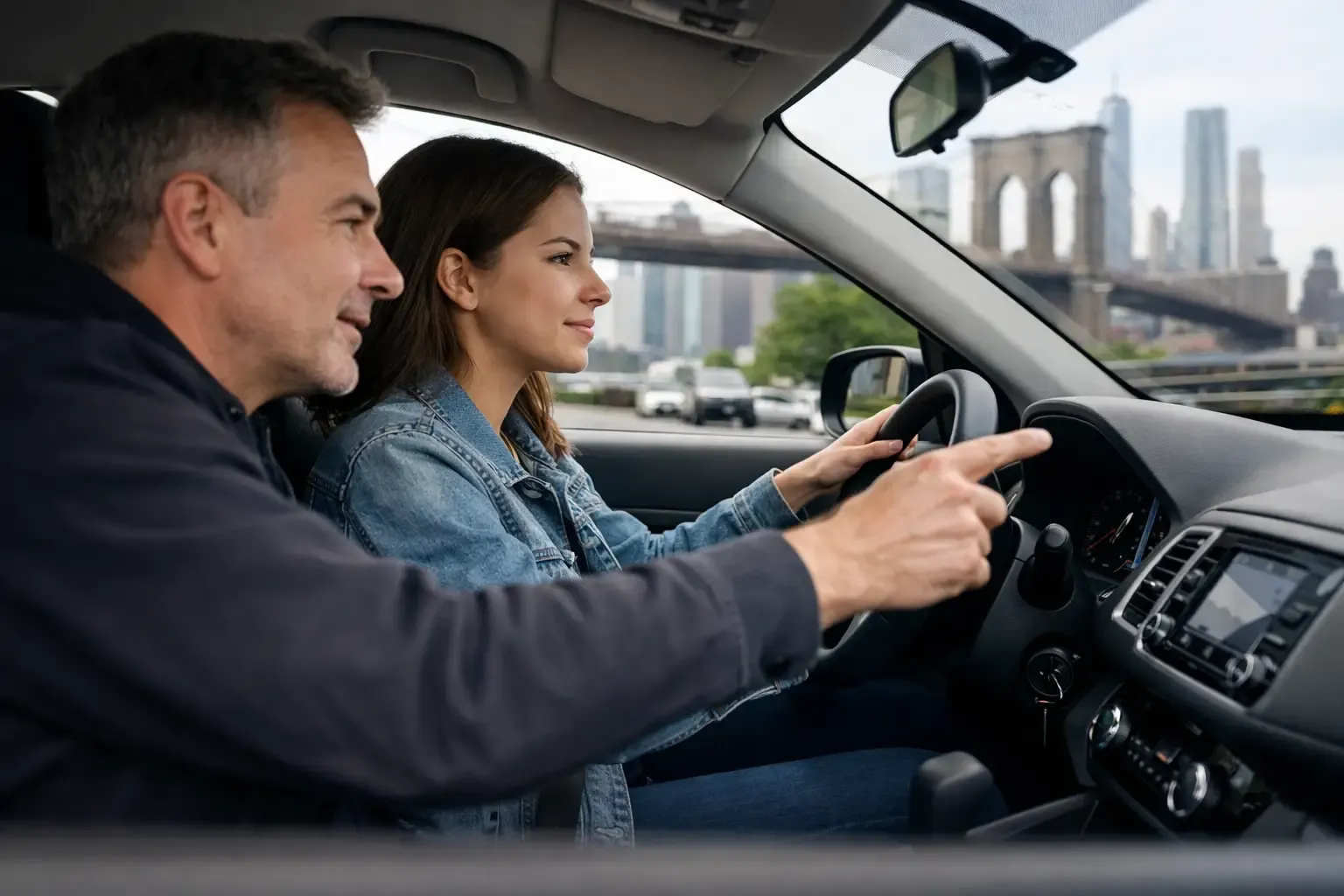
A Brooklyn road test can feel much bigger than a short drive. You may be thinking about parallel parking on a busy block, checking mirrors while cyclists pass, making smooth turns at unfamiliar intersections, and remembering every instruction from the examiner. If you are looking for one on one driving lessons Brooklyn learners can schedule around real life, personalized instruction gives you room to practice without feeling rushed, compared, or left behind.
A private lesson is not simply time behind the wheel. It is focused coaching built around the skills you need most, whether that means learning how to start from zero, correcting habits from years of driving abroad, or preparing for another road test after an unsuccessful attempt. The right instructor meets you at your current level and turns each lesson into practical progress.
Why one on one driving lessons in Brooklyn make a difference
Group instruction can explain the rules of the road, but driving is a physical, fast-moving skill. You need feedback while you are steering, braking, scanning for pedestrians, and deciding who has the right of way. In a one-to-one lesson, the instructor can watch your timing and decision-making closely, then explain what to adjust in a calm, clear way.
That personal attention matters in Brooklyn. Streets can be narrow, parking can be tight, and traffic patterns change quickly from one neighborhood to the next. A student who feels comfortable driving on a quiet avenue may still need help with double-parked vehicles, buses pulling out, busy crosswalks, one-way streets, and turns where visibility is limited. Your lesson can focus on these real conditions instead of following a one-size-fits-all routine.
Private instruction also protects your confidence. Some new drivers need extra repetition before a maneuver feels natural. Others understand the basics but become anxious when an instructor gives directions. With one instructor and one student, there is time to slow down, ask questions, repeat a skill, and celebrate improvement without pressure.
The lesson plan should fit your starting point
A useful driving plan begins with an honest assessment. There is no benefit in pretending every student needs the same number of lessons. A beginner with a new learner permit needs a different approach than an adult who drove for years in another country or a student who did not pass a previous road test.
For a beginner, early lessons usually center on vehicle controls, proper seating and mirror position, smooth acceleration and braking, lane position, turns, stop signs, and safe observation. These basics are not glamorous, but they are the foundation for every harder skill. When steering and braking become more consistent, the student can focus more attention on traffic and decision-making.
For a more experienced driver, the work is often about adapting to New York expectations. An instructor may identify habits such as incomplete stops, weak mirror checks, turning too wide, changing lanes too quickly, or failing to check blind spots. International license holders, especially, may be skilled drivers who simply need to learn the specific habits and road test standards expected for a New York State license.
Students returning after a failed road test need targeted correction rather than vague encouragement. A clear review of what happened can reveal whether the issue was parking, observation, speed control, right-of-way decisions, or test-day nerves. Then the next lessons can be built around the exact areas that need attention.
What you should practice before the road test
Road test preparation is more than memorizing a parking sequence. Examiners are looking for safe, controlled driving throughout the test. That includes how you enter traffic, approach intersections, respond to signs, position the vehicle, and show awareness of the people and vehicles around you.
A strong private lesson gives dedicated time to the skills that often make students nervous: parallel parking, three-point turns, backing up, lane changes, and turns at intersections. It should also cover the small habits that affect the overall drive, such as signaling early, coming to a full stop, checking mirrors regularly, keeping a safe speed, and looking in the direction you intend to travel.
Practice routes can be helpful, but no instructor can promise that your road test will follow one exact route. The smarter goal is to build adaptable driving skills. When you understand how to scan an intersection, judge space, and stay composed after an unexpected instruction, you are better prepared wherever the examiner takes you.
It also helps to schedule a final lesson close to the test date when possible. This is an opportunity to refresh key maneuvers, settle into the training vehicle, and address last-minute questions. It should not be the first time you practice parking or driving in traffic. Confidence comes from repetition over time.
A comfortable training vehicle can help you focus
New drivers have enough to think about without struggling with an unfamiliar or poorly maintained car. A clean, modern training vehicle with appropriate safety features can make the learning experience feel more comfortable and professional. It gives you a dependable place to practice the same basics until they become second nature.
At Sky Light Driving School, students can train in premium vehicles, including BMW and Lexus models, while receiving instruction designed around their level and goals. The point is not luxury for its own sake. It is having a comfortable, well-equipped environment where you can focus on driving with confidence.
For some students, language support is equally valuable. Clear communication is essential when learning a safety skill. English and Russian instruction can help students and families understand feedback, ask questions freely, and feel fully informed at each stage of the licensing process.
Choose lessons based on your goal, not just the lowest price
Price matters, but the cheapest lesson is not always the best value if it leaves you unsure of what to practice next. Before choosing a driving school, ask how lessons are personalized, whether instructors work with beginners and anxious drivers, what type of vehicles are used, and whether the school can support you beyond the lesson itself.
Convenience matters too. Many Brooklyn students are balancing school, work, family responsibilities, or a long commute. A school that can help coordinate lessons, provide the required 5-hour pre-licensing course by Zoom, and assist with road test scheduling can remove a great deal of stress. Instead of trying to piece together each requirement on your own, you have a clearer path from permit to test day.
Packages can make sense when you know you need several lessons, road test preparation, or use of a school vehicle for the exam. On the other hand, an experienced driver may need only an evaluation lesson and a focused refresher. The best option depends on your current experience, comfort level, and timeline.
How to get more from every private lesson
Come ready to learn, not ready to be perfect. Wear comfortable shoes that let you feel the pedals, bring your learner permit when required, and arrive a few minutes early so the lesson can start calmly. If a particular situation worries you, say so. Maybe parking is difficult, left turns make you tense, or you are unsure how to handle aggressive city traffic. Naming the concern gives your instructor a chance to build practice around it.
Between lessons, review the feedback you received. You do not need to memorize a long checklist, but choose one or two habits to carry into the next drive. For example, you might focus on checking mirrors before slowing down or making every stop complete and controlled. Small corrections, repeated consistently, create safer driving.
Most of all, give yourself permission to improve gradually. Driving confidence is earned through correct practice, not through rushing toward a test date. With patient instruction, clear goals, and enough time behind the wheel, Brooklyn streets become less intimidating and your next drive becomes another step toward independence.
🌟 Did You Know?
Investing in one-on-one driving lessons can significantly boost your confidence and skills behind the wheel, especially in complex environments like Brooklyn. Personalized coaching not only prepares you for the road but also helps you conquer those nerve-wracking moments that often trip up new drivers!


