

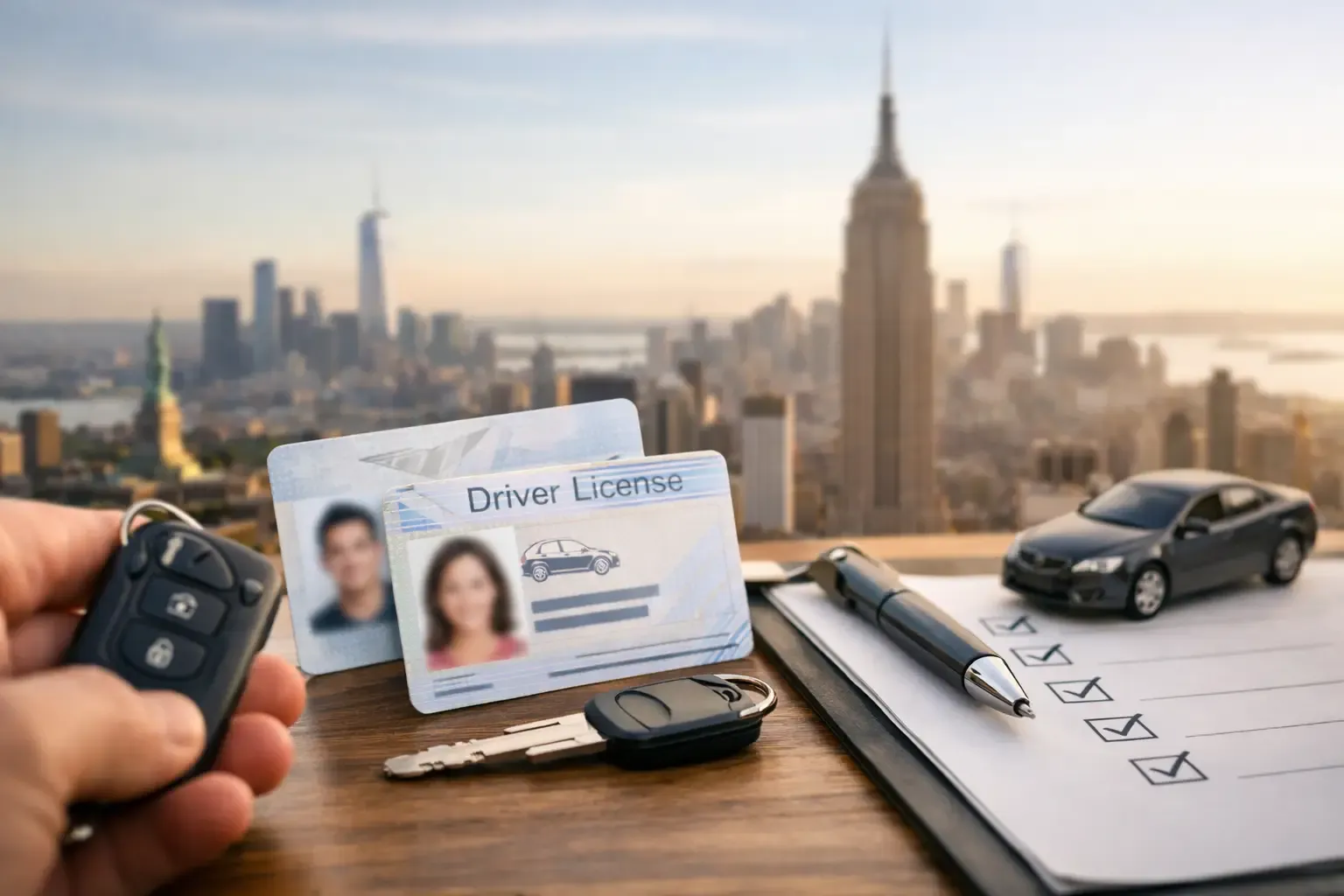
A New York driver’s license is not earned in one appointment. It is built through a series of decisions that start with your permit, continue with real practice, and end with a road test where calm, safe habits matter more than flashy driving. This New York permit to license guide explains what Brooklyn and NYC drivers need to do, where people commonly lose time, and how to arrive at the road test prepared.
1. Apply for your New York learner permit
Your learner permit is the starting point for practicing legally with a qualified supervising driver. For most first-time drivers seeking a standard Class D license, the process includes completing a permit application, proving your identity and date of birth, providing required residency and Social Security documentation or an acceptable alternative, passing a vision screening, and passing the written knowledge test.
The exact documents depend on your age, immigration status, and the type of ID you already have. International drivers and new residents should be especially careful here. A foreign license may show driving experience, but it does not automatically replace the New York permit process for a first New York license.
Before you begin, make sure you are applying for the license class you actually need. Most personal drivers need a Class D license. If you are under 18, you may receive a junior learner permit, which comes with additional supervision and driving restrictions.
2. Learn the rules before you start practicing
Passing the written test is only the first checkpoint. The permit rules still control who can sit beside you, when you can drive, and where you can practice. A permit holder must drive with a properly licensed supervising driver who is at least 21 years old and holds a license valid for the vehicle being driven.
New York City has its own practical challenges: heavy traffic, frequent double-parked vehicles, cyclists, pedestrians, buses, narrow streets, and aggressive lane changes. That is why a quiet parking lot alone is not enough preparation. You need to develop judgment in real traffic, at a pace that matches your current confidence level.
For teen drivers, the rules are more restrictive. Junior permit holders have limits on nighttime driving and passengers, and the rules can vary by location. Parents should review those limits before scheduling practice. The goal is not just to avoid a ticket. It is to build safe habits while the new driver is still learning.
3. Get consistent behind-the-wheel practice
There is no single number of lessons that fits every student. A beginner who has never driven may need time to understand steering, braking, turns, lane position, and traffic awareness before focusing on test maneuvers. An experienced driver from another country may need fewer foundational lessons but more coaching on New York rules and road test expectations.
Consistency matters more than cramming. One or two focused sessions each week usually help students retain corrections and build muscle memory. Long gaps between lessons can make a nervous driver feel like they are starting over.
Your practice should gradually include residential streets, busier avenues, intersections with pedestrians, lane changes, parking, turns, backing up, and stop-and-go traffic. A professional instructor can identify habits that family members often miss, such as rolling stops, late braking, wide turns, weak mirror checks, or driving too close to parked cars.
At Sky Light Driving School, one-on-one lessons are designed to meet students at their actual skill level, whether they are first-time drivers, nervous adults, or experienced drivers adjusting to New York expectations. Training in a well-maintained BMW or Lexus can also help students practice with confidence in a controlled, professional environment.
4. Complete the required pre-licensing course
Before you can schedule a New York road test, you must complete either a DMV-approved 5-hour pre-licensing course or a qualifying high school or college driver education course. The 5-hour course is not a driving lesson. It is a required classroom-style program covering traffic laws, driver responsibility, alcohol and drug awareness, and safe driving decisions.
Many students choose an approved Zoom class because it is easier to fit around work, school, or family obligations. Make sure you complete the course through an approved provider and keep track of your certificate information. You will need proof of completion when scheduling and taking your road test.
Do not leave this requirement until the last minute. A student can be fully capable behind the wheel but still lose a preferred road test date because the course certificate is not ready.
5. Know what changes if you are under 18
Drivers under 18 have an extra responsibility before the road test. In addition to the pre-licensing requirement, they generally need certification that they completed at least 50 hours of supervised practice, including 15 hours after sunset. A parent or guardian typically certifies those hours.
This requirement is worth taking seriously. Night driving creates different visibility, distance judgment, and hazard-recognition challenges. Even if your teen is comfortable during daylight, include supervised evening practice before the road test whenever it is allowed and safe to do so.
Teen drivers also benefit from clear roles. Parents can support regular practice, while an instructor can focus on technical corrections and test-ready habits. This combination often gives new drivers the most balanced preparation.
6. Schedule the road test when your skills are ready
Once you have a valid permit and your required pre-licensing or driver education certificate, you can schedule a road test. Availability can vary, especially around Brooklyn and other high-demand NYC locations, so flexibility with dates and test sites can help.
Do not schedule based only on the first open appointment. Schedule when you can reliably demonstrate the core skills without reminders. A road test examiner is evaluating whether you can operate safely and independently, not whether you can repeat a maneuver after coaching.
Before booking, ask yourself whether you can do the following consistently:
- Come to a complete stop at stop signs and red lights
- Check mirrors and blind spots before moving, turning, or changing lanes
- Maintain safe speed and proper lane position
- Make controlled turns without cutting corners or drifting wide
- Parallel park, back up, and handle basic three-point turns when requested
- Respond calmly to pedestrians, traffic signals, and unexpected road conditions
The road test is short, but every decision counts. A rushed turn, missed observation, unsafe lane change, or failure to yield can affect the result. The best preparation is targeted practice in the areas where you make repeat mistakes.
7. Prepare your road test vehicle and test-day plan
Test day should feel organized, not frantic. If you are using your own car, it must be properly registered, insured, and safe to operate. Make sure the vehicle has working lights, signals, brakes, mirrors, seat belts, and a current inspection. Bring the documents required for the appointment, including your learner permit and pre-licensing certificate information.
Many students choose a road test package because it removes several moving parts at once. You can practice immediately before the test, arrive in a suitable vehicle, and avoid relying on a friend or family member who may be unavailable or uncomfortable lending their car. It also gives the instructor one last opportunity to settle nerves and reinforce the exact habits you should carry into the test.
Plan to arrive early, but do not spend the hour before your test trying to learn new techniques. Use that time for a short warm-up drive, a review of observations and signals, and a calm reset. Eat something, silence distractions, and remember that the examiner is looking for safe, predictable driving.
What if you do not pass the first time?
A failed road test is disappointing, but it is also useful feedback. Many drivers do not fail because they cannot drive. They fail because anxiety brings back an old habit: incomplete stops, delayed mirror checks, poor parking setup, or moving before they have fully assessed the intersection.
Read the feedback carefully and practice the specific issues before retesting. Booking another test immediately without correcting the cause can create the same result. A focused lesson or two is often more valuable than repeating hours of unfocused driving.
DMV procedures, document rules, and appointment availability can change, so confirm current requirements before each step. Then give yourself enough time to learn properly. A license is more than a pass on a test - it is the confidence to handle New York roads safely long after the examiner steps out of the car.
🧐 Did You Know?
Many first-time drivers underestimate the significance of consistent practice. Frequent, focused driving sessions not only build confidence but are essential in forming safe driving habits. Consider practicing in different conditions to fully prepare for the diverse challenges of New York's roads!


