

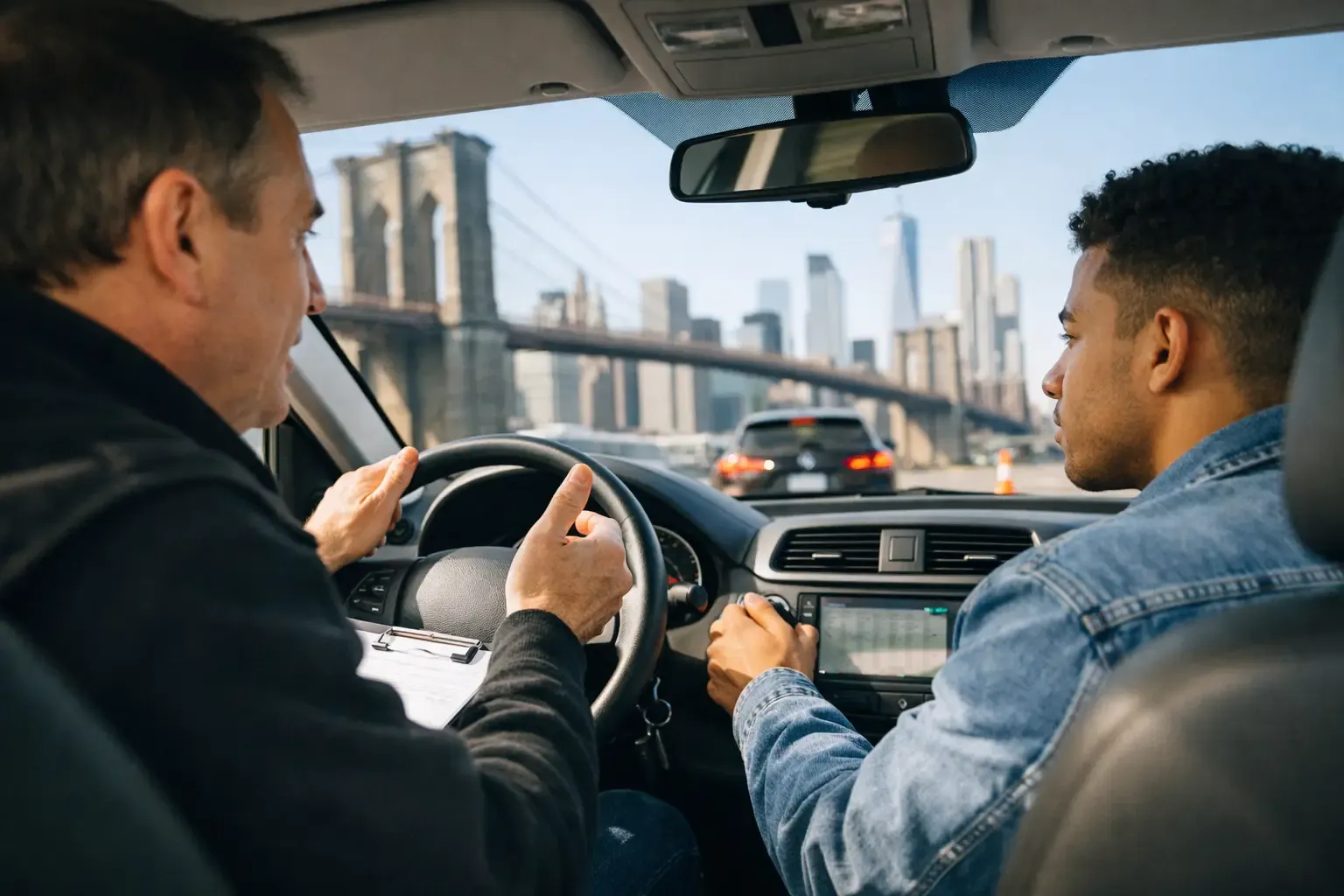
Brooklyn traffic does not give new drivers much extra time to think. A double-parked delivery truck can narrow your lane without warning. A cyclist may appear beside the passenger door. A pedestrian can step into the crosswalk as the light changes. Defensive driving lessons Brooklyn learners choose should prepare them for those real decisions, not just teach a few maneuvers for the road test.
The goal is not to drive timidly or slowly enough to disrupt traffic. It is to stay alert, create space, recognize risk early, and make calm choices before a situation becomes urgent. For a first-time driver, an adult returning to driving, or an experienced driver adapting to New York rules, that confidence comes from focused practice with a patient instructor.
What Defensive Driving Means on Brooklyn Streets
Defensive driving is the habit of looking beyond the car directly in front of you. You scan intersections, check mirrors regularly, anticipate what other road users may do, and keep enough room to respond safely. In Brooklyn, this matters on wide avenues, narrow residential blocks, busy commercial corridors, and near schools alike.
A defensive driver does not assume another motorist will signal before merging or stop fully at a sign. They watch the wheels of parked vehicles for signs that a door may open. They reduce speed when visibility is limited and avoid rushing through a yellow light simply because the driver behind them is impatient.
These habits also support better road test performance. Examiners look for observation, control, judgment, and safe responses to changing conditions. A student who checks mirrors, approaches intersections carefully, maintains proper lane position, and makes deliberate turns shows more than basic vehicle control. They show that they are ready to share the road responsibly.
Skills Your Lessons Should Build
Good instruction turns broad safety advice into repeatable actions. During one-on-one lessons, an instructor can identify where your attention or control needs work and adjust the route and pacing accordingly. A beginner may need time to build steering, braking, and mirror routines. A driver with prior experience may need to replace habits that do not meet New York road test standards.
Seeing Hazards Before They Become Problems
Many driving errors begin with late recognition. If you notice a stopped bus only when you are close to it, you may brake too hard or make an unsafe lane change. If you spot it early, you can check mirrors, ease off the accelerator, signal when needed, and move safely.
Lessons should train you to scan far ahead while also checking side mirrors and rearview mirrors. You will learn to notice brake lights several cars ahead, people waiting near crosswalks, vehicles angled out of parking spaces, and traffic patterns around buses and construction zones. This is especially useful in Brooklyn, where your view can be blocked by parked cars, trucks, and crowded intersections.
Managing Space and Speed
Following distance is not a rule reserved for highways. Even at city speeds, space gives you time to react. Students often focus so intensely on the vehicle in front of them that they miss what is happening around them. Defensive instruction helps you maintain a safe buffer while keeping pace with traffic.
Speed choice depends on conditions. The posted limit is the maximum allowed under normal circumstances, not a promise that every moment is safe at that speed. Rain, darkness, heavy pedestrian activity, poor visibility, and tight street layouts may require more caution. Your instructor can help you feel the difference between being appropriately careful and being so hesitant that you create confusion for others.
Making Confident Turns and Lane Changes
Turns and lane changes demand observation, timing, and commitment. Before changing lanes, you need a mirror check, a signal, a blind-spot check, and enough open space to move without forcing another driver to brake. Before turning, you need to look for pedestrians, cyclists, oncoming traffic, and vehicles that may be turning across your path.
Students sometimes make the mistake of checking once and assuming the situation has stayed the same. In city traffic, conditions can change in seconds. Defensive habits mean checking again before you move, especially after waiting at an intersection or yielding to someone.
Staying Calm When Other Drivers Are Not
You cannot control aggressive drivers, sudden honking, or the person who cuts in without signaling. You can control your response. Defensive driving teaches you not to compete for space, chase a green light, or react emotionally to pressure from behind.
A calm response may mean allowing a speeding vehicle to pass, waiting for a safer opening, or continuing straight rather than forcing a turn. Those decisions can feel frustrating in the moment, but they protect you, your passengers, and everyone around you. Confidence behind the wheel is not about proving you belong on the road. It is about making sound decisions even when the road feels unpredictable.
How Personalized Lessons Make a Difference
Watching videos or reading the driver’s manual can explain rules, but it cannot show you exactly why your turns are too wide or why you miss mirror checks under pressure. Personalized instruction gives you immediate feedback while you are driving. Instead of practicing the same mistake repeatedly, you can correct it in the moment and understand the reason behind the correction.
This is particularly valuable for nervous drivers. Anxiety can make a student grip the wheel too tightly, brake abruptly, forget a step, or freeze at a busy intersection. A patient instructor can build skills in quieter areas first, then introduce more demanding traffic situations as the student becomes ready. There is no benefit to rushing into difficult conditions before the basics feel controlled.
For international license holders, lessons can focus on the details that differ in New York: local signs, right-of-way expectations, school-zone awareness, full stops, lane discipline, and road test routines. For teens, the emphasis may be on developing mature judgment before driving independently. For adults who have delayed getting licensed, the right pace can make the process feel manageable rather than overwhelming.
Sky Light Driving School provides one-on-one instruction in newer BMW and Lexus vehicles, with English and Russian support available for students who are more comfortable learning in either language. The premium vehicle experience is not just about appearance. A clean, well-maintained car and professional guidance can help students feel settled and focused during each lesson.
Defensive Skills and the New York Road Test
Road test preparation should never be limited to memorizing a route. You may be asked to demonstrate common tasks such as turns, stopping, backing up, parking, and safe lane positioning. Every one of these tasks is stronger when it is supported by defensive habits.
For example, a proper stop is not only about bringing the car to a complete halt. It includes checking the intersection, understanding who has the right of way, and proceeding only when it is safe. Parallel parking is not only about fitting into a space. It requires slow control, awareness of nearby vehicles, and checking for pedestrians before moving.
A road test package can be helpful when you want your lessons, vehicle use, and scheduling support organized in one plan. The best option depends on your starting point. Someone with a permit and no driving experience usually needs more practice than a driver who has already spent years behind the wheel overseas. An honest assessment at the beginning helps you choose enough instruction without paying for practice you do not need.
Keep in mind that the required New York 5-hour pre-licensing course and hands-on driving lessons serve different purposes. The pre-licensing class covers essential rules and safety concepts before the road test. Behind-the-wheel lessons are where you practice applying those concepts in real traffic, with a licensed instructor beside you.
Getting More From Every Lesson
Come to each session ready to practice one or two specific goals. That might be smoother braking, better observation at intersections, parallel parking, or lane changes. Ask your instructor what to work on between lessons, even if you do not have access to a car for independent practice. Reviewing procedures mentally and studying New York traffic rules can reinforce what you learned.
If a maneuver makes you nervous, say so. Hiding anxiety often leads students to avoid the skill until the road test is close. It is better to spend extra time on the problem early, break it into smaller steps, and repeat it until it feels familiar. Progress is not always linear, but consistent practice creates reliable habits.
The license is the milestone, but the real value is being able to drive through Brooklyn with awareness, patience, and control. Choose lessons that help you become the driver who sees the risk early, makes room for others, and gets home safely with confidence.


